
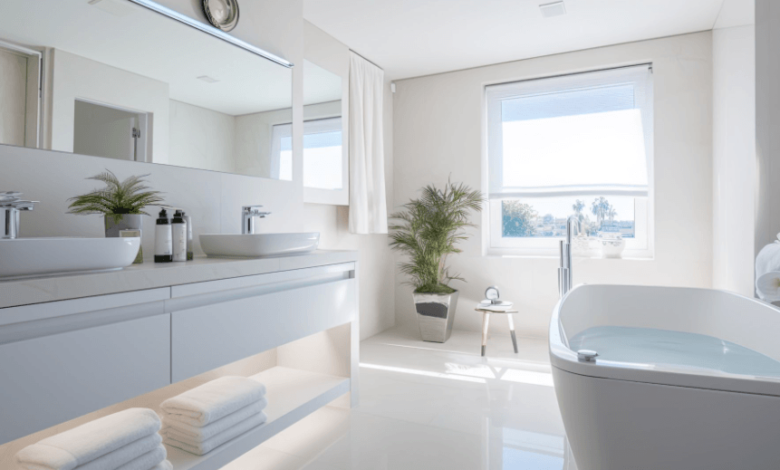
Your bathroom probably deserves more than you’ve given it. Not just a fresh coat of paint or a new faucet, but a real rethink of how the space works for you. Smart bathroom design has crossed well past the novelty phase. Today’s connected bathrooms genuinely reshape how mornings start, how evenings close out, and how your household flows day to day.
Here’s a number that puts things in perspective: the EPA estimates the average family could save 2,700 gallons of water per year simply by switching to WaterSense-labeled showerheads. One fixture. Measurable annual savings. And that’s barely scratching the surface of what a well-planned bathroom can do.
What “Smart” Actually Means for a Bathroom Now
Let’s clear something up: smart bathroom design isn’t about piling gadgets onto every wall and calling it innovation. That approach gets exhausting fast. What it actually means is building a space where lighting, water, mirrors, and ventilation operate together as one coherent system, almost invisibly.
The Foundation You Need Before Anything Else
Every serious connected bathroom is built on a handful of core elements: smart lighting, voice-controlled fixtures, app-linked shower systems, humidity-sensing ventilation, and water management tools. These aren’t isolated purchases sitting next to each other on a shelf. They communicate.
When homeowners work with professionals during shower remodeling projects and plan for smart technology from day one, the integration process ends up far smoother, more efficient, and far less disruptive than retrofitting later. Planning matters enormously here.
The goal, ultimately, is a bathroom that quietly adapts to your habits without you needing to manage it.
Smart Shower Technology That Actually Changes Your Morning
Few single upgrades shift a daily routine as noticeably as smart shower technology. Digital controls let you dial in your exact water temperature before you even step in. Voice activation means no cold shock while you’re still half-asleep and squinting at the light.
Features Most Homeowners Overlook
App-connected showerheads track water usage in real time useful if conservation genuinely matters to you. Wireless temperature sensors eliminate those frustrating mid-shower hot-and-cold swings. Some systems will even sync your playlist and bathroom lighting to whatever mood you’ve set for that morning.
Custom presets make a surprising difference. A sharp, bright “wake-up” profile feels entirely different from a slower, dimmer “wind-down” evening routine. That intentionality adds up over time.
Smart shower technology also pairs naturally with WaterSense-certified components so you’re getting the personalized experience *and* the conservation benefit in the same package.
Your Mirror Does More Than Reflect
Once you’ve stepped out, your mirror picks up the experience. A smart mirror bathroom setup goes considerably further than anti-fog glass, though that alone is underrated.
What Today’s Smart Mirrors Actually Do
Real-time weather, calendar updates, and news briefings are table stakes now. More advanced models include skin health analysis, AI-guided beauty tutorials, and personalized morning displays that adapt to your schedule. Hands-free voice controls keep the surface clean and interaction minimal.
The best installations look completely intentional. No awkward screens bolted to the wall, just a flush-mounted, clean surface that happens to be genuinely intelligent. A well-designed smart mirror bathroom reduces the mental overhead of a rushed morning in ways that are hard to fully appreciate until you’ve lived with one.
Smart Toilets: Stop Hesitating, Start Considering
Here’s where a lot of homeowners stall until they actually sit down and use one. Smart toilet innovations span heated seats, automated lids, personalized bidet controls, and self-cleaning cycles. The market data backs up why this category is growing fast.
The Health and Efficiency Case
Grand View Research valued the global smart toilet market at USD 9.57 billion in 2023, with projections reaching USD 21.55 billion by 2030. That’s not hype, that’s demonstrated demand.
Health-monitoring models can flag hydration patterns and basic wellness signals. Water-efficient flush systems meaningfully cut household consumption over time. For aging-in-place households, especially, hands-free controls and built-in night lighting make the bathroom considerably safer without touching a single structural wall.
Smart toilet innovations have quietly become one of the most practical, high-return investments in any modern bathroom remodel.
When Everything Works Together
The real payoff arrives when all these systems stop talking in separate apps and start speaking one language. Smart bathroom upgrades connected through a central hub, Amazon Alexa, Google Home, or Apple HomeKit, stop feeling like devices and start feeling like a single, seamless experience.
Building Personalized Routines That Run Themselves
Think about what that actually looks like day-to-day: a bright, energizing “school morning” mode for the kids versus a calm, low-lit “spa night” setting for adults. Every family member can have their own profile triggered on a schedule or by voice.
| Feature | Standalone Device | Hub-Connected System |
| Control Method | App or manual | Voice, schedule, or sensor |
| Customization | Basic presets | Full per-user routines |
| Energy Management | Limited | Automated & optimized |
| Scalability | Add devices separately | Modular, seamless expansion |
The modular nature of these systems means you don’t have to gut the bathroom on day one. You can build intelligently over time.
Safety and Accessibility Deserve More Attention
Once your core devices are working in harmony, the next layer worth addressing is safety. The CDC reports that the unintentional fall death rate for adults 65 and older was 69.9 per 100,000 population in 2023. That’s a statistic worth sitting with.
Practical Features That Reduce Real Risk
App-controlled medicine cabinets, UV sterilization drawers, and motion-activated organizers contribute to a cleaner, safer environment. Voice-activated controls eliminate unnecessary reaching. Modern grab bars and adjustable counter configurations look architectural now, nothing institutional about them.
And smart lighting that activates automatically at night? That alone removes one of the most common fall triggers in the home.
See also: CHAdeMO Home Charger: Complete Guide to Residential EV Charging Solution
Materials and Finishes That Complement Smart Spaces
The surfaces surrounding your smart devices carry equal weight. Antimicrobial tile coatings, LED-integrated flooring, and touch-responsive cabinetry are showing up in high-quality remodels across the board right now. Recycled-material vanities, smart metering fixtures, and energy-efficient radiant floors let you reduce consumption without sacrificing comfort.
WaterSense and ENERGY STAR certifications are worth checking for every fixture on your list. Beyond daily savings, these selections tend to hold their value well if resale ever comes into the conversation.
How to Actually Start Planning This
A needs assessment saves you more time and money than any other single step. Ask yourself: what’s the actual pain point right now? Temperature control? Clutter? Accessibility? Energy costs? That answers your priority list.
Kohler, Moen, TOTO, and Delta continue to lead on smart shower and toilet integration. For mirrors, Electric Mirror and Robern are worth a serious look. Most of these brands offer modular systems that retrofit into existing layouts without requiring full demolition. Future-proof wiring and dedicated outlets during the rough-in phase keep all your options open.
Quick Answers to Common Questions
Which upgrades deliver the best resale value?
Smart mirrors, digital shower controls, and smart toilets top buyer preference lists consistently.
Can you retrofit without demolition?
Most lighting, mirror, and fan upgrades replace existing fixtures directly. Smart shower or toilet installations may need minor plumbing adjustments.
Are there affordable starting points?
Motion-sensing night lights, humidity fans, and smart lighting are all low-cost, high-impact first steps.
The Bottom Line
A smarter bathroom isn’t a luxury; it’s a long-term investment in comfort, safety, and daily quality of life. Whether you begin with a single connected mirror or commit to a fully integrated system, the difference shows up every morning. Connect with a qualified remodeling professional, start with a clear plan, and turn what feels like a future possibility into something you actually live with every day.

